
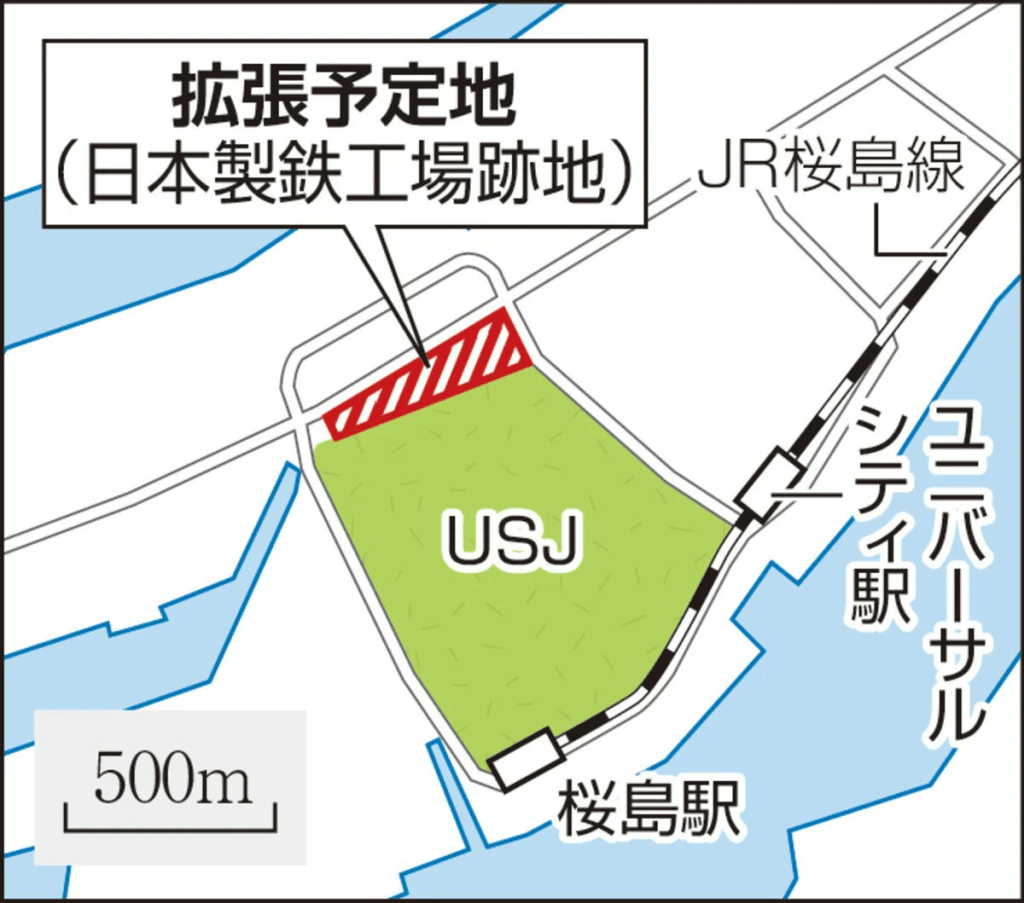
Universal Studios Japan (USJ) announced today a plan to acquire approximately 6 hectares (~14.8 acres) of newly leased municipal land. This commitment marks the land-locked park’s first perimeter expansion since its March 2001 opening.
At an upper cost projection of ¥300 billion, the groundbreaking project will shatter records with an unprecedented investment of ¥50.0 billion per hectare ($313.3 million per hectare). This CapEx-to-land ratio is the highest recorded in the themed entertainment industry, surpassing Tokyo DisneySea’s recent Fantasy Springs expansion (~¥22.86 billion/ha) and more than quadrupling the historical cost of USJ’s own Wizarding World of Harry Potter (~¥11.25 billion/ha) before inflationary adjustments.
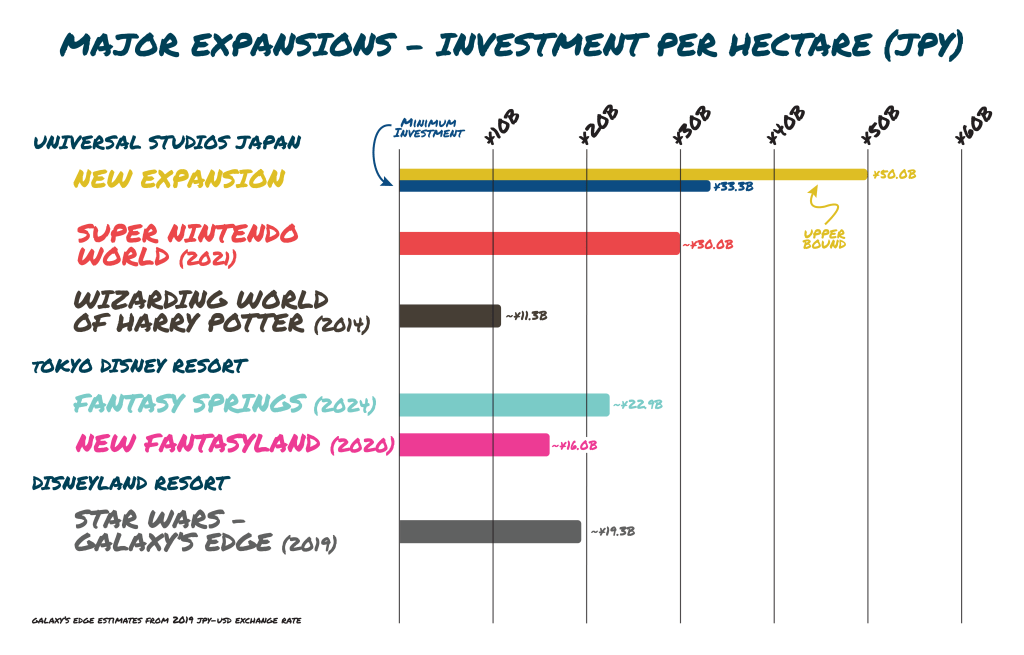
The expansion comes at a crossroads for Universal Studios Japan. With the exception of Super Nintendo World, USJ’s new experiences strategy focuses on replacements over expansion. In 2020, the Backdraft VFX show closed to make way for Villain Con: Minion Blast, and recently, The Amazing Adventures of Spider-Man attraction and the entire Sesame Street Fun World land (~3 Ha) closed to make way for yet-to-be-named experiences.
However, this replacement strategy is not sustainable long-term. Historically, USJ balanced attraction closures with new expansions; Backdraft closed around the same time as Phase 1 of SNW opened, and Spiderman closed the same year as Donkey Kong Country opened. Without new offerings to maintain capacity, every attraction that must close for a several-year period is a blow against an already immensely crowded park. According to the 2024 TEA Global Experience Index, USJ has become the third most-visited theme park in the world, second only to Magic Kingdom in Orlando and Disneyland in Anaheim.
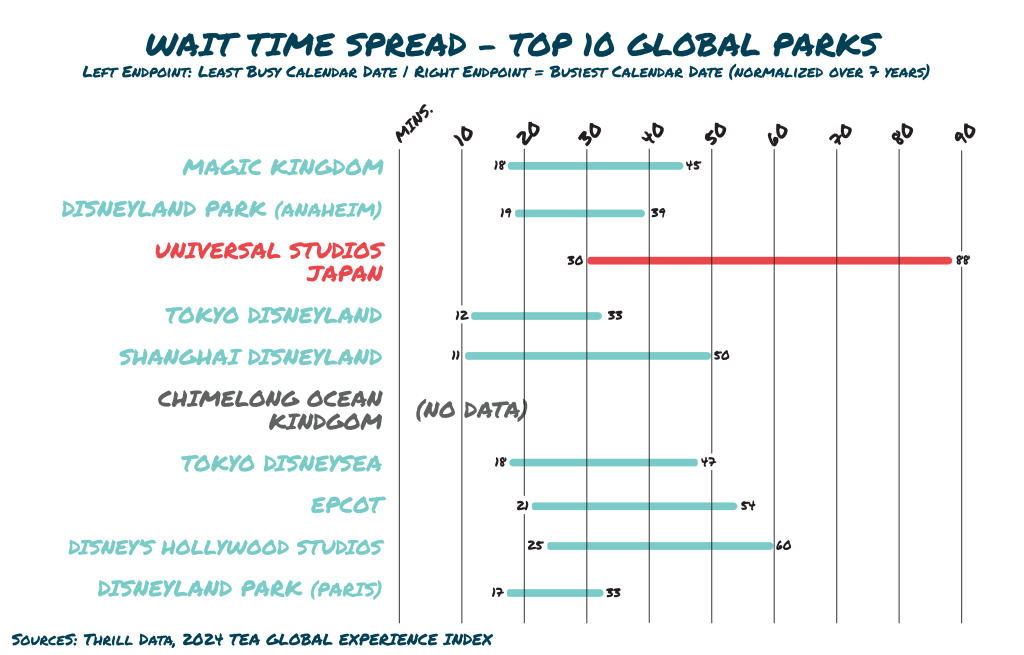
Driving home USJ’s desperate need for capacity, we can plot average wait times in the globally most-visited parks. Beyond the noticeable fact that Disney covers the board, notice that USJ is by far the outlier here, with its wait time floor and ceiling noticeably higher According to Thrill Data, the least-crowded calendar date at USJ in 2026 still saw an average wait time of 30 minutes. On the high end, average daily wait time- inclusive of even small attractions- averaged 88 minutes.
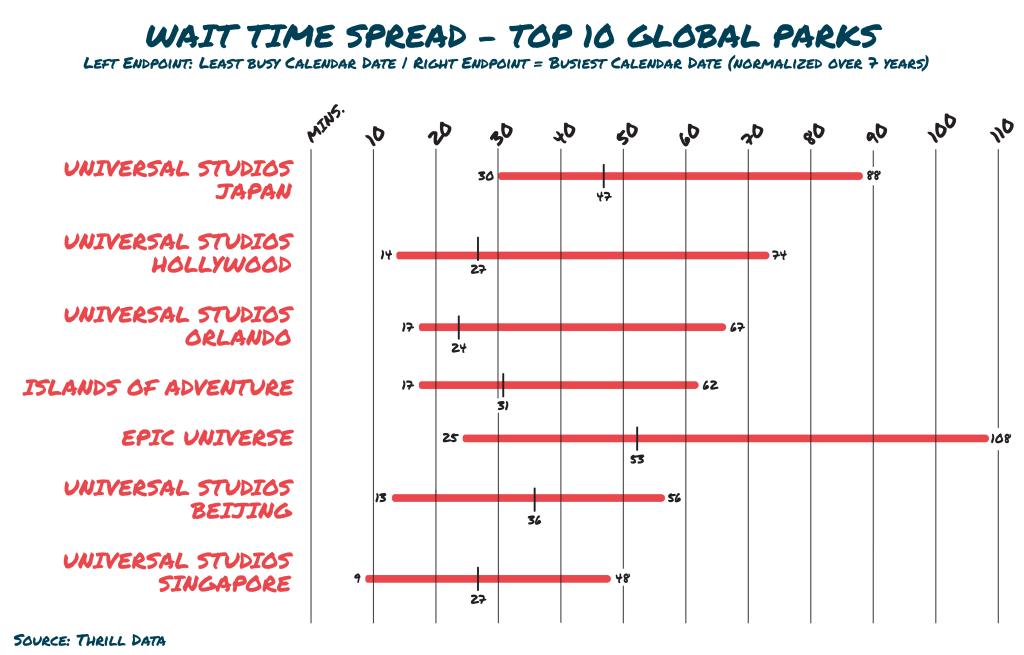
Even compared to Universal’s own portfolio of theme parks, USJ’s last several years of data can be most closely compared to Epic Universe, a park that opened just over two years ago.
Industrial No More
Perhaps the biggest question you may have is, why not expand the park’s perimeter until now? The demand has certainly qualified the need, especially post-Covid. To answer that question, let’s take a look at everyone’s favorite topic, zoning!
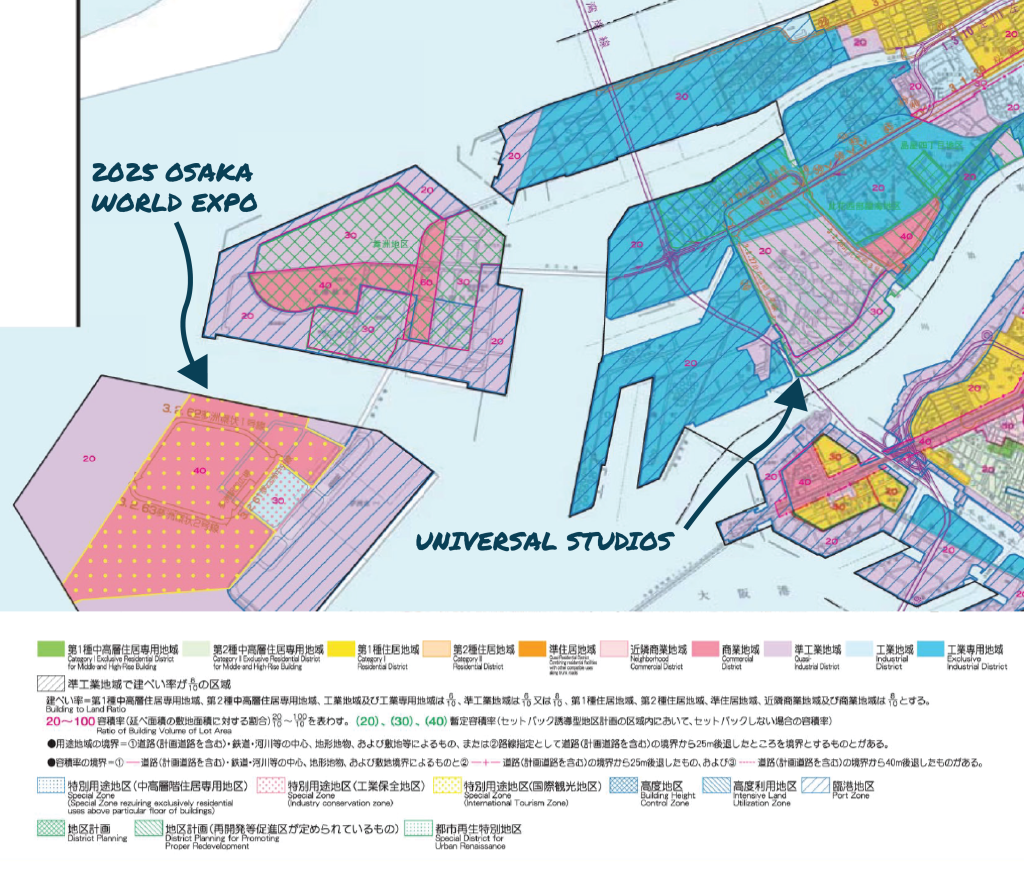
Located in Osaka Bay, USJ is built on infill land, similar to the Tokyo Disney Resort in Chiba. Historically, Osaka Bay has served as a major industrial port for shipping. In the 1990s, the region began looking to redevelop areas of the industrial district, and partnered with Universal to open a park and CityWalk shopping, dining, and entertainment complex that would anchor the area. The first major project by Universal outside the United States, the park opened in 2001 to high attendance numbers, and was deemed a success.
While new entertainment-focused developments have cropped up around the area, much of the surrounding land remains as it always has been. You’ll notice that USJ is bordered by a blue-hued sea of “Exclusive Industrial District” zoned laned, and also the literal sea. Today, those manufacturing areas focus on advanced technology, machinery, and precision fabrication.
An Expertly-Executed Expo
The same advanced industrial technologies that kept USJ hedged into its original plot of land also made Osaka Bay a prime place to hold the 2025 World Expo. Occurring in southwest Osaka Bay, the pink and yellow polka-dotted island on the bottom-left of the map was re-zoned as a special commercial tourism zone.
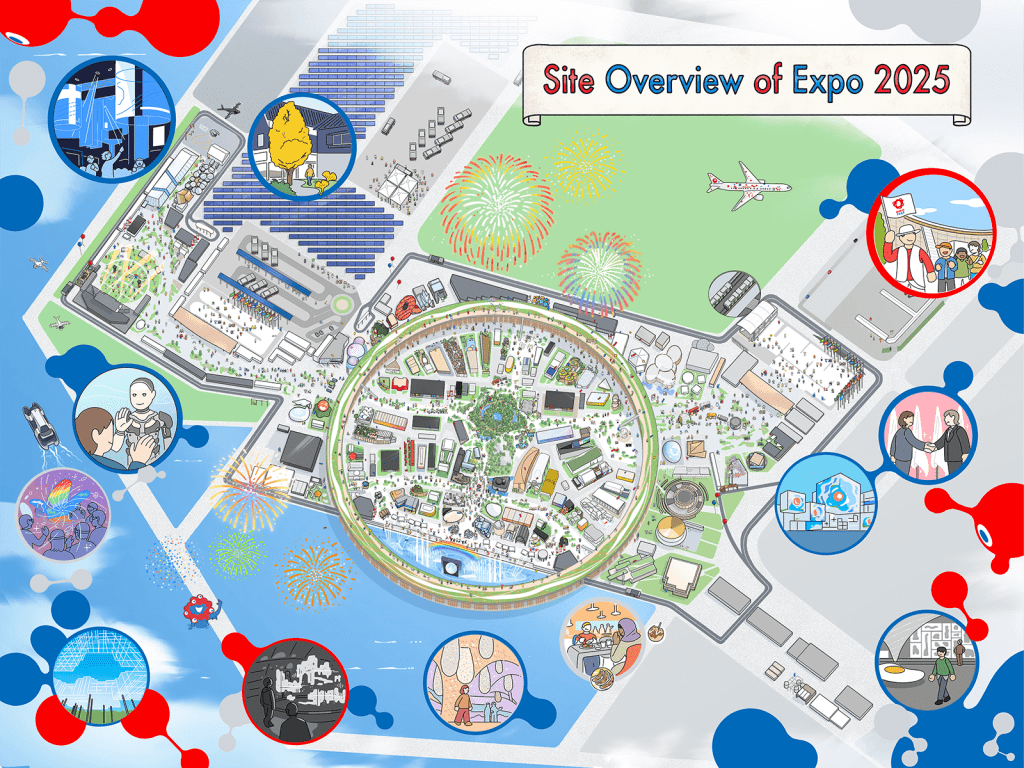
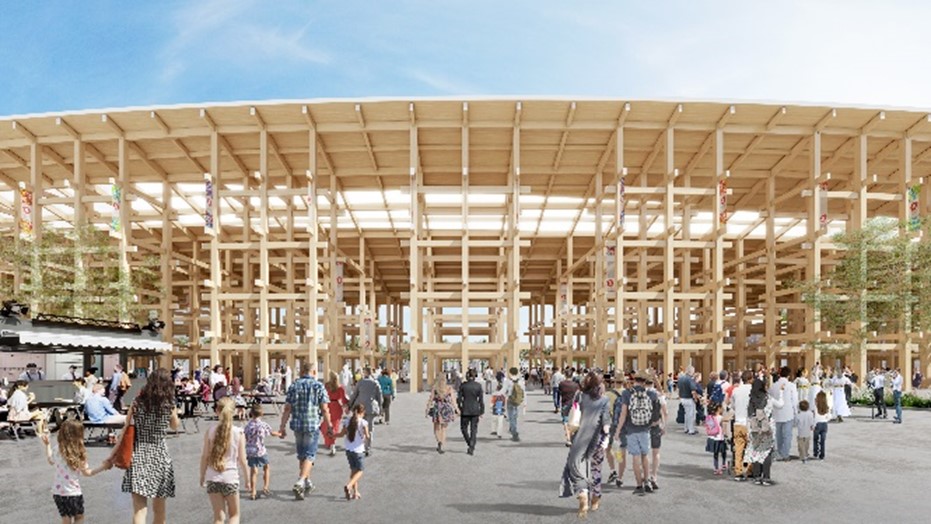
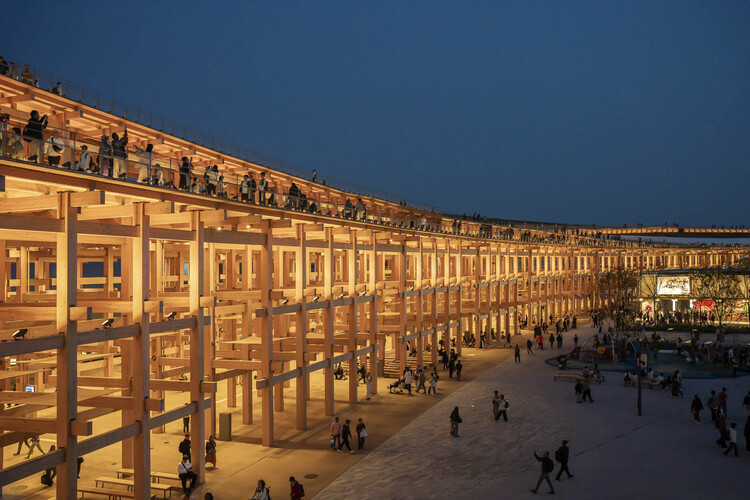
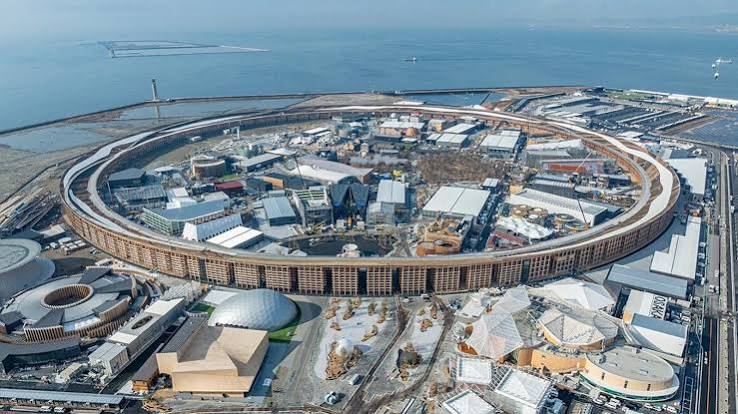
JR Sakurajima Station, located right next to USJ, served as staging ground, handling bus shuttles and park-and-ride logistics connecting the mainland across the water to Yumeshima Island where the Osaka Expo was held.
The expo was a massive success, bringing in 29 million visitors from April to October 2025, bolstered by increasing tourism numbers to Japan. USJ, en route to the massive expo, increased marketing and sold combo tickets with the expo, which brought extra attendance to the park simply by proximity.
After the conclusion of the 2025 Osaka Expo, Osaka City has set sights on developing the Expo area into a high-tech urban hub. With several high-profile projects advancing in the region, a massive increase in tourism to Japan, and strong attendance numbers in 2025, Universal began looking to jump on the development bandwagon. As the final motivator, an expiring lease on a 6-hectare industrial steelmaking plant right next door would make the stars align for a new project…
It’s a Small Steel World
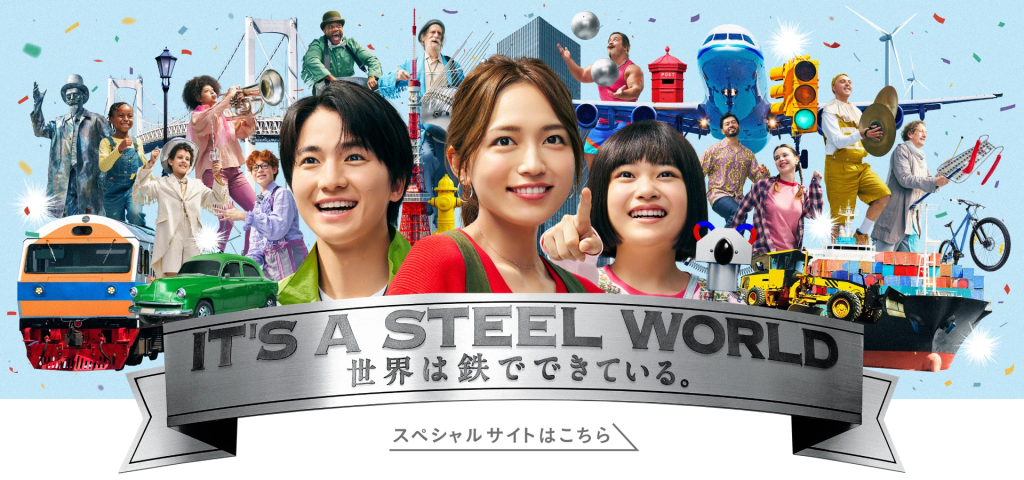
To call Nippon Steel a “large” organization would be an understatement. The corporation is the world’s third-largest steelmaker by production volume, employs 113,000 people globally, and any annual revenue figure less than $50 billion USD would be considered “low”. Beyond wielding said revenue to purchase the U.S. Steel corporation in 2025 for $14.9 billion, I had the pleasure of discovering that they also invest heavily into their marketing materials.
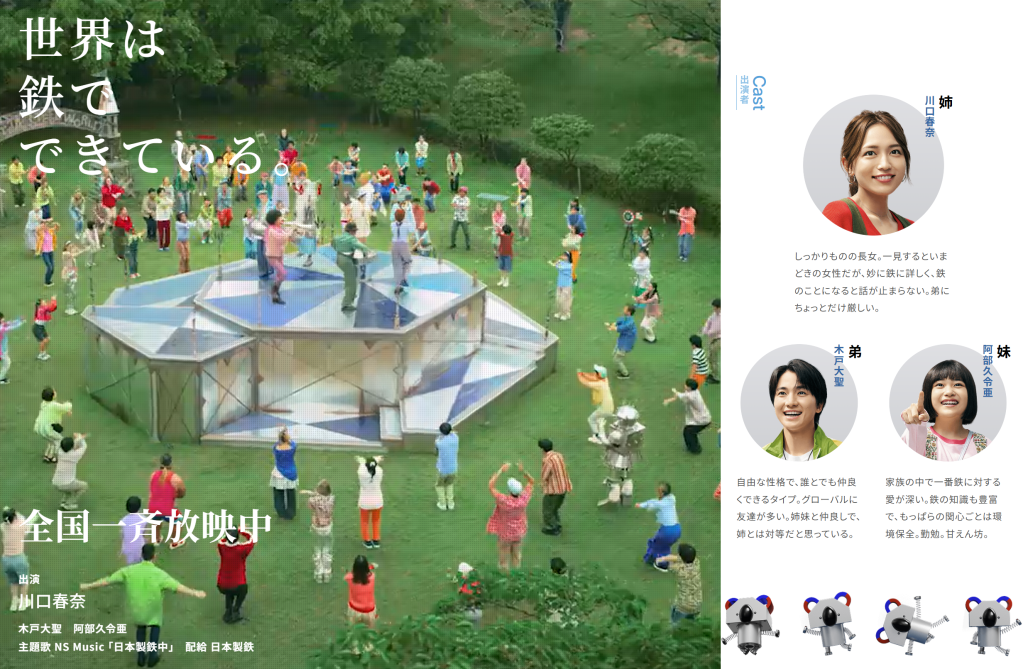
Since the early 2010’s, the company has gone to significant lengths to reshape its public image. Instead of dime-a-dozen industrial reels, marketing materials revolve around lighthearted characters, such as three siblings (portrayed by A-list talent) living in a seaside town, who harbor an obsession with metallurgy, structural engineering, and decarbonization. Yes, you are reading this correctly. But that’s not all; each of them has a character profile you simply must read.
Haruna Kawaguchi (川口春奈): At first glance, she seems like a typical modern woman, but she’s strangely knowledgeable about iron, and when it comes to iron, she can’t stop talking. She’s a little strict with her younger brother.
Taisei Kido (木戸大聖): He has a free-spirited personality and can get along with anyone. He has many friends globally. He casually doodles blast-furnace schematics on napkins.
Kurea Abe (阿部久令亜): She has the deepest love for iron in the family. She has extensive knowledge of iron, and her main interest is environmental conservation. She is diligent, but also a bit of a spoiled child.
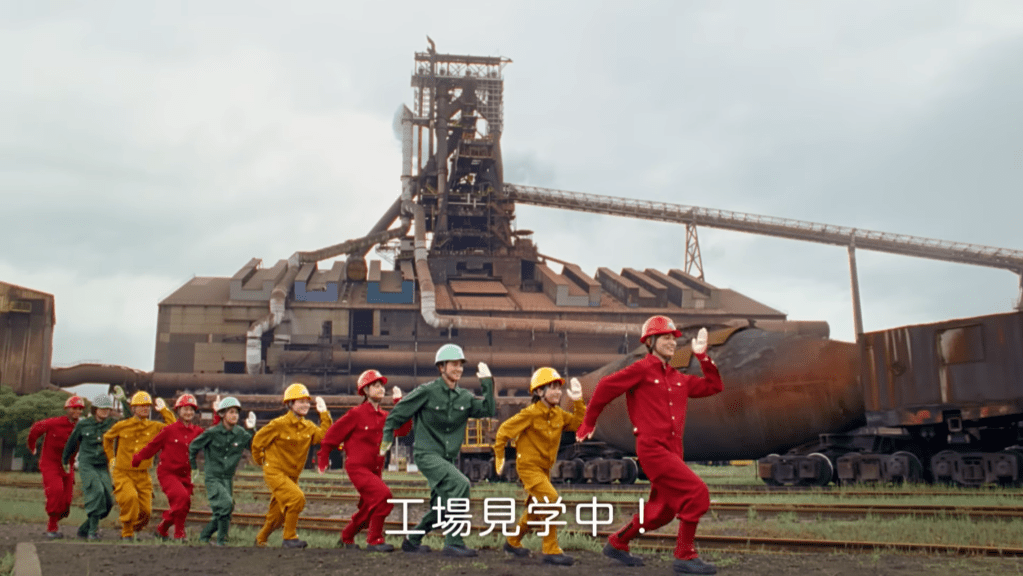
The “episodes” put out by Nippon Steel are cheery, vibrant, slightly hallucinogenic, and a tad apocalyptic- just the way I like my marketing served. While these materials are at best “loosely” tied to the topic of USJ, the combination of steel and entertainment industries has left me in fits of laughter. There’s something terribly engaging in watching a group of a-list talent in vibrant jumpsuits singing a jingle and dancing around a drab, hazardous metalworking factory. Yet, for a manufacturing company, the production value was there, and I admit, everything from the silly “episodes” to the catchy, dryly humorous jingle declaring that everything from bridges to frying pans is made of steel, had a charm to it.
Despite the joviality of the media materials, they debuted as Nippon Steel was falling on difficult times. The company’s March 2021 Medium-to-Long-Term Management Plan identified shrinking domestic steel consumption, intense competition from Chinese producers, and high fixed urban operating costs as primary constraints. The latter point led to Nippon Steel’s decision to shutter a particular manufacturing plant on the Sakurajima waterfront.
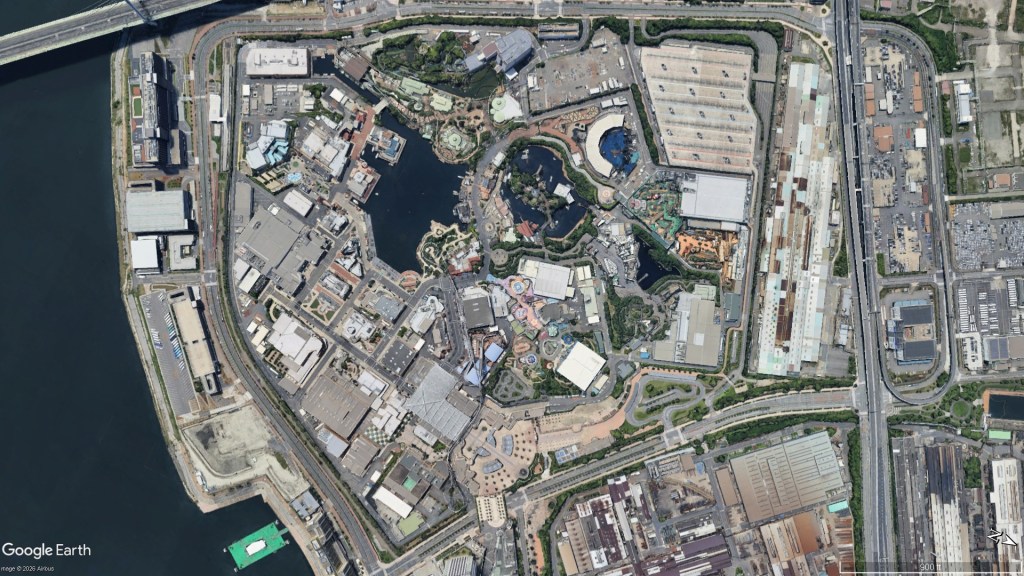
While the early 2000s de-industrialization of Osaka Bay was largely successful, it could only build so far. Though much of the land across the region is owned by Osaka (including USJ), long-term leases had been signed several decades before any plans of commercial development. This severely restricted Universal Studios Japan from expanding outside its initial 2001 footprint by means of land acquisition.
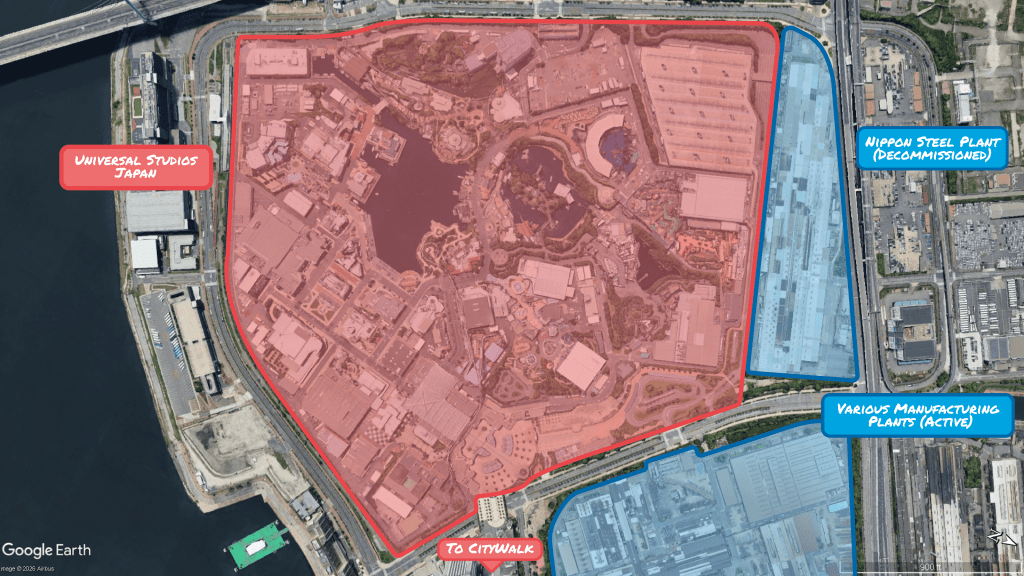
Thus, when the lease for Nippon Steel Kansai Works Osaka facility (long name) became due for renewal in 2027, the already shuttered facility became a top target for Universal’s expansion plans. While unconfirmed, Universal would have likely had to propose the economic potential of taking over the long-term lease, thus the massive ¥50B investment figure. Structural demolition of Nippon Steel’s adjacent 7-hectare Kansai Works Osaka facility will be completed February 2027.
Universal Forward
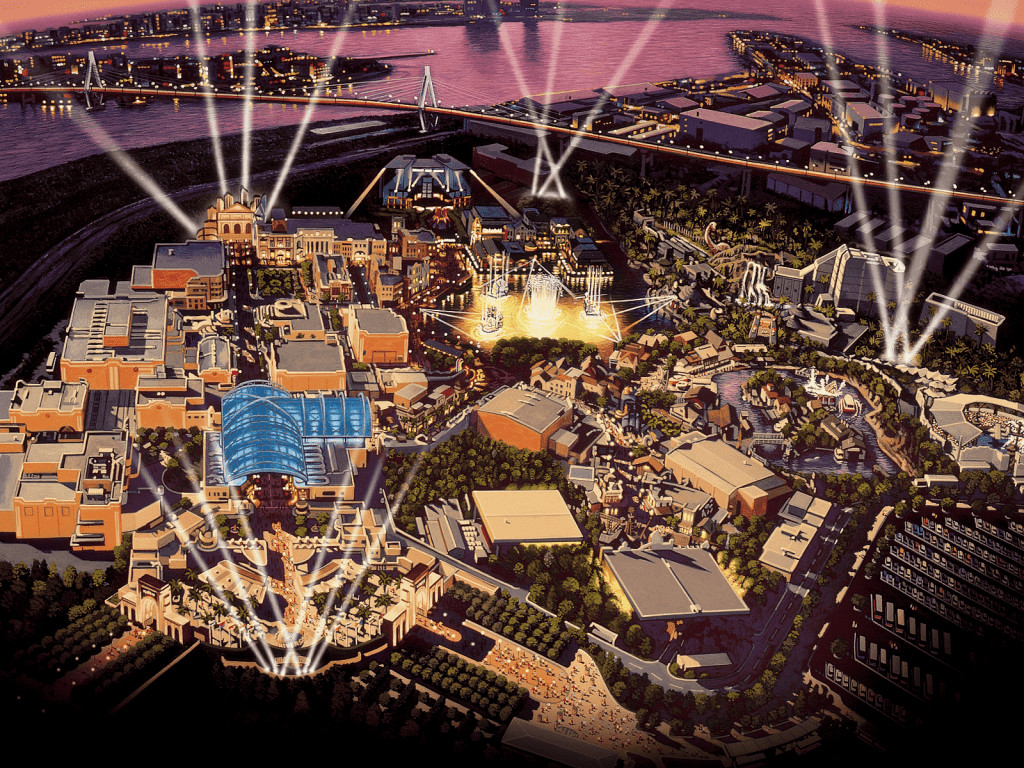
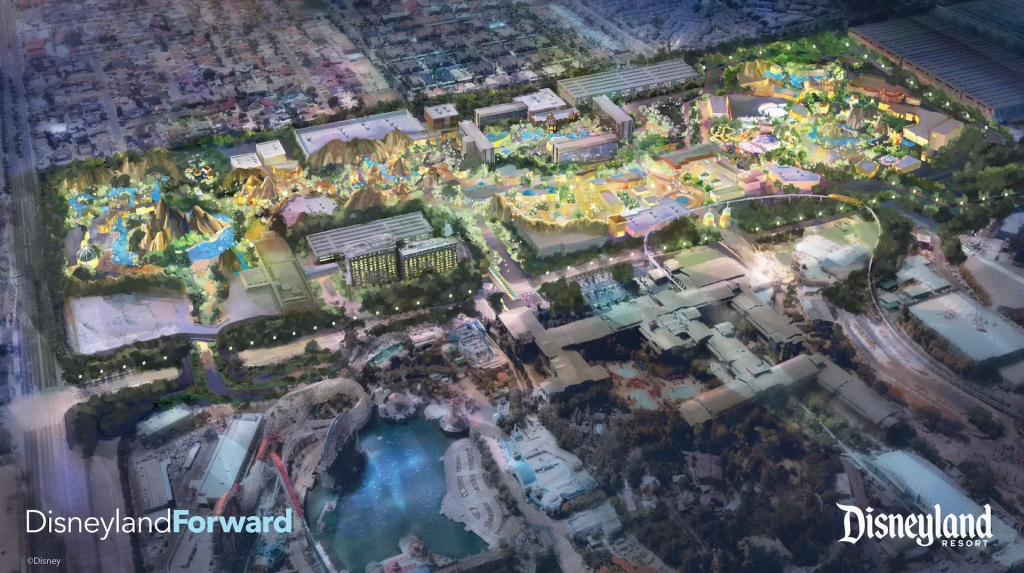
So, what’s next for Universal Studios Japan? Unfortunately, not much is known at this point about what they’ll do with the newly-acquired expansion area. I’d liken the project most closely to Disneyland Resort’s Disneyland Forward plan, which spans multiple decades and also aims to re-zone land for an increasingly space-constrained park.
There are several projects Universal will likely finish before any notable construction completes. First, the replacement for Amazing Adventures of Spider-Man, which closed in January 2024, is due in the next several years. Sesame Street Fun World, which shuttered in May 2026, is also rumored to become a Pokemon experience, which Universal and The Pokemon Company announced back in January 2026.

Despite being incredibly space-constrained, there’s still so much to be excited about for the future of Universal Studios Japan. Bordered in by streets, offices, train stations, the sea, and more manufacturing plants, the Nippon Steel site may be Universal Japan’s one and only expansion opportunity. In turn, Universal Creative is likely planning wisely to get maximum usage out of the land, and after successes like Epic Universe, I’m thrill to see what’s coming next for Universal Studios Japan. Thanks for reading!
Appendix
Methodology Note: Wait time ranges represent the spread between each park’s historically quietest calendar date and peak calendar date (aggregated across all operating attractions from park open to close via Thrill-Data). Multi-year calendar date averages were utilized to normalize one-off anomaly dates to better represent each resort’s true crowd density.
Aggregate wait time data sourced from Thrill Data
USJ、大規模に拡張する方向で最終調整…新たなアトラクションの開設目指す | Yomiuri News
USJ、3000億円でパーク拡張 大阪市から隣地借り新アトラクション | Nikkei Company
USJ26年目の決断、隣地拡張で世界一射程に 飛び地沖縄は過去に断念 | Nikkei Company
Nippon Steel Corporation Announces Medium- to Long-term Management Plan (March 5, 2021) | Nippon Steel


Leave a Reply